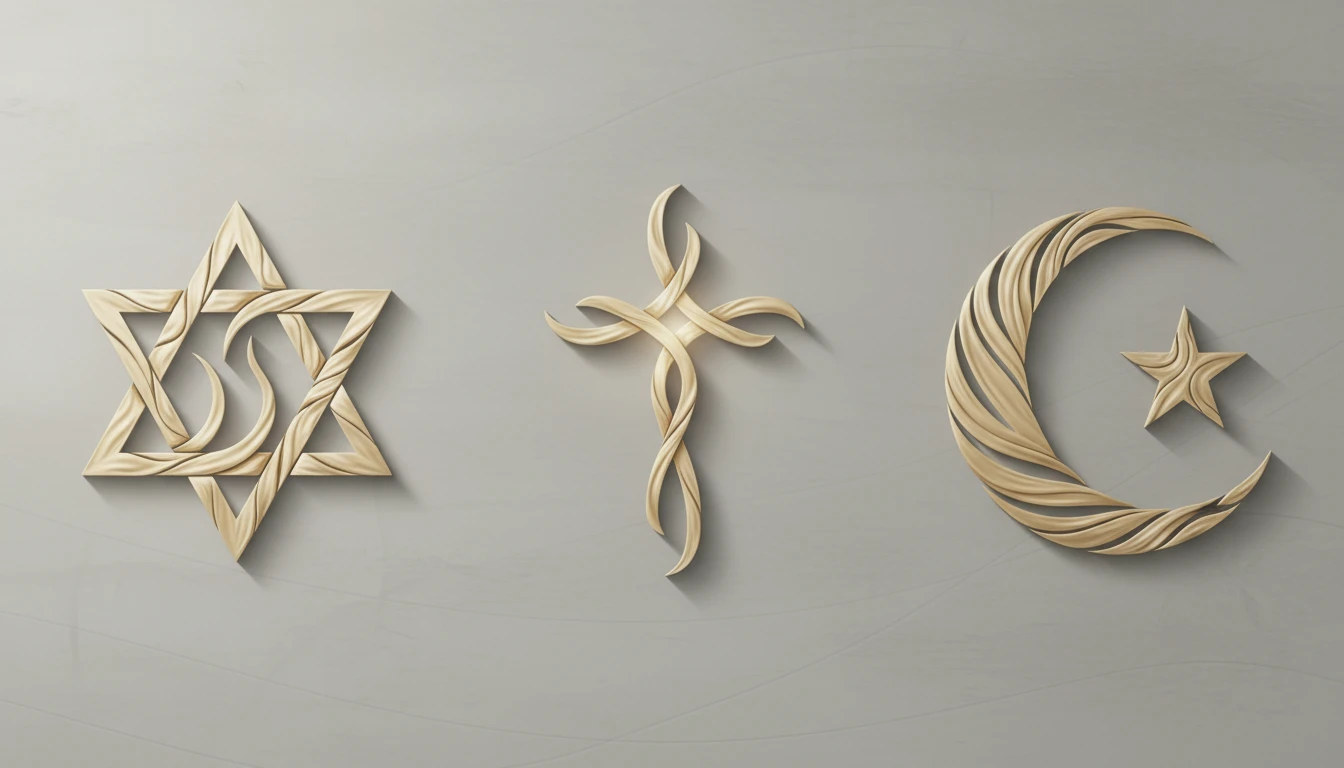
The Abrahamic religions, Judaism, Christianity, and Islam, have shaped much of the world’s history, culture, and individual outlooks. Each one centers on faith in one God, but the ways they interpret scripture, acknowledge prophets, and approach religious life vary widely. This guide will walk you through their common roots and how they branch out, helping clarify where they overlap and what makes each one unique.
Origins and Historical Roots
Judaism, Christianity, and Islam all started in the Middle East. They’re called “Abrahamic” because each tradition traces its spiritual family tree back to Abraham, a key patriarch mentioned in all three. Abraham’s story begins in the Hebrew Bible, is found in the Christian Old Testament, and is referenced in the Qur’an too. Even though they share this origin, their historical development steered them down different paths.
Judaism is the oldest of the three. Its traditions stretch back over three thousand years, starting with the ancient Israelites and becoming more defined through Moses, the Exodus, and the Torah. Christianity emerged from within the Jewish tradition about two thousand years ago, getting its footing after the life of Jesus of Nazareth. Islam made its appearance in the 7th century in Arabia, coming after both Judaism and Christianity. Islam recognizes many of the same figures but introduces its own teachings through the Prophet Muhammad.
Beliefs and Sacred Texts
Each religion has its own sacred book, shaping how followers view life, purpose, and guidance.
- Judaism: The Hebrew Bible (Tanakh), especially the Torah (the first five books), is central. Jewish tradition also values the Talmud, a massive collection of rabbinic commentary and teaching.
- Christianity: The Bible, divided into Old and New Testaments. The New Testament, telling about Jesus’ life and teachings, sets Christianity apart from Judaism. Christians often use translated versions suited to their language and culture, making the message accessible to communities worldwide.
- Islam: The Qur’an is believed to be the literal word of God as revealed to Muhammad. Muslims also follow the Hadith, a set of the Prophet’s sayings and actions, which helps guide daily living.
While all three point to Abraham and share certain stories—like those of Noah, Moses, and Adam—they offer different perspectives and sometimes disagree on the details. Christianity teaches that Jesus is the Son of God and savior. Judaism sees him as a wise teacher but not divine. Islam regards Jesus (Isa) as an important prophet, but not God, with Muhammad as the final messenger.
Practices and Rituals
Looking at daily religious practices reveals what each faith prioritizes.
- Judaism: The focus is on following mitzvot (commandments) from the Torah, celebrating religious holidays like Passover, and observing the Sabbath—Saturday is a day of rest and worship. Kosher food rules matter, as does gathering in synagogues.
- Christianity: Rituals show a lot of variety between denominations, but most Christians get baptized and share in communion. Worship typically happens on Sundays, with holidays like Easter and Christmas being highlights. Dietary rules are usually less strict these days, though fasting during Lent remains an important period for many.
- Islam: Muslim daily life is shaped by the Five Pillars: openly stating one’s faith (shahada), praying five times a day, giving alms, fasting during Ramadan, and traveling to Mecca at least once if possible. Friday is special for group prayer. Halal food guidelines are observed, and worship takes place in mosques.
Similarities and Differences
Even though there are clear differences, these religions share some big similarities:
- Belief in just one God (monotheism).
- Tracing roots to Abraham’s life and experiences.
- Stories featuring key prophets and figures, including Moses, who appears in all three scriptures.
- Ideas of prayer, giving to others, and the value of community.
- Sacred texts with overlapping or related stories.
But the religious differences really pop out:
- View of Jesus: Only Christianity believes he is divine. Islam and Judaism see him as a teacher or prophet, but not as God.
- Sacred Writings: Each faith follows different books and holds them to different levels of authority.
- Religious Law: Jewish law (halakha) and Islamic law (sharia) include rules for many parts of life. Christianity, in its most popular forms, focuses more on faith and grace than on detailed legal codes.
- Leadership: Judaism has rabbis, Christianity has priests, ministers, or pastors, while Islam looks to imams and scholars.
Challenges and Misconceptions
Followers of all three religions sometimes run into stereotypes, misunderstandings, and bias. In Western pop culture, Christianity is often the one most openly mocked, particularly in TV shows, movies, and internet memes. However, this isn’t always the case everywhere. In other regions, Islam or Judaism might get more public criticism or be targeted due to local politics or conflicts. Religious humor also appears in general, but knowing the context helps when trying to figure out which group is most in the spotlight.
Stereotypes often come from a mix of news, historical events, and not having direct experience. Every tradition contains a wide range of beliefs and expressions, so generalizing never gives the whole story.
Key Topics to Know About Abrahamic Faiths
- Places of Worship: Synagogue (Judaism), Church (Christianity), Mosque (Islam). Each serves as a space for worship, learning, and community gathering.
- Major Festivals: Passover, Rosh Hashanah, and Yom Kippur for Jews; Christmas and Easter for Christians; Ramadan and Eid for Muslims.
- Role of Women: Customs differ not just between religions, but across branches and locations. All three are home to modern groups working toward more equality and female leadership.
- Interfaith Relationships: History includes both clashes and partnerships. Dialogue and cooperation between faiths are on the rise in many parts of the world.
FAQ: More on Similarities, Differences, and Modern Life
Question: What are the main similarities and differences between Judaism, Christianity, and Islam?
Answer: The biggest similarities include belief in one God, reverence for Abraham, and seeing prophets as sources of revelation. The stand-out differences are the place of Jesus in each faith, the books each follows, and the way religious law works in daily life.
Question: What is the most openly mocked religion?
Answer: Christianity currently gets the most open jokes or satire in Western media and entertainment. However, depending on where you are, Judaism or Islam might be under heavier criticism, especially when political or cultural issues come up.
Question: Who do Jews, Christians, and Muslims worship?
Answer: All three worship one God. Jews use names like “Yahweh” or “Hashem.” Christians may say “God,” “the Father,” or “the Holy Trinity,” depending on denomination. Muslims call God “Allah,” meaning “the God” in Arabic. Even though each faith chooses different languages and customs, they’re all referring to the same universal creator.
Question: Why do these religions sometimes clash?
Answer: Conflicts can arise from religious disagreements, past historical disputes, political issues, and cultural misunderstandings. While periods of peaceful coexistence exist, the history of friction shapes current relationships and perceptions.
Why Knowing the Differences and Similarities Matters
Learning about the Abrahamic religions helps you understand why people celebrate certain holidays, observe certain dietary rules, or spend time in prayer. It is also key to breaking down stereotypes and starting real conversations. Personally, learning more about these faiths changed how I see global events, relationships, and even little daily details—like neighbors observing special food customs or fasting at specific times.
Digging in further shows that these religions share much more than expected, but understanding the differences is crucial for appreciating what makes each tradition meaningful to its followers and to the world.