Understanding where the major religions come from and how they continue to develop helps me see how much culture, history, and belief shape daily life for billions. In 2026, technology and global connections influence spiritual beliefs. Still, the roots of the world’s largest religions go back thousands of years. I find it fascinating to examine the origins and current status of religions, especially as traditions both change and persist in today’s society.
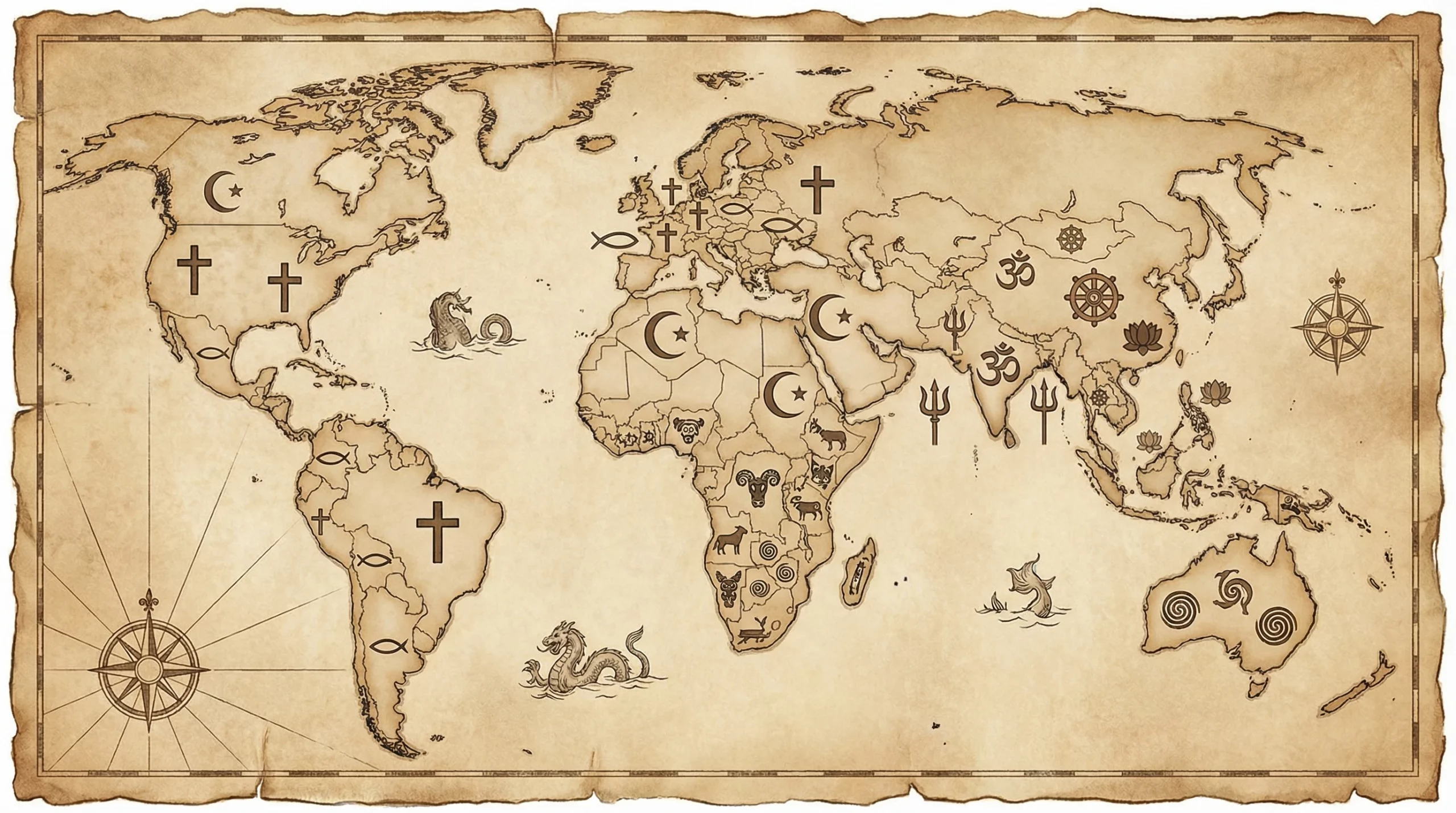
The World’s Largest Religions in 2026
Religion continues to play a major role in culture and personal identity. Data from the Pew Research Center and other global studies confirm that Christianity remains the largest religion in 2026, with over 2.4 billion followers worldwide. Islam comes in second, with over 1.9 billion adherents. These numbers fluctuate over time, but Christianity remains the largest by population in 2026.
Hinduism, Buddhism, and folk religions still make up significant parts of the global population. Some regions, like South Asia and parts of Africa, have seen steady or rising religious participation. Meanwhile, secularism and nonreligious identification are more common in regions like Europe and East Asia.
Other fast-growing spiritual communities, including new forms of Christianity and global Pentecostalism, continue to emerge, especially in developing nations. The rise of nonreligious or “spiritual but not religious” groups is evident in cities worldwide, underscoring the ongoing evolution of religious identification.
Growth Trends and Future Projections: 2026 to 2050
Looking ahead, demographers and researchers expect Islam to grow rapidly. Some projections, including those cited by the Pew Research Center, suggest that Islam could even surpass Christianity by 2050 if current trends hold. Much of this growth comes from higher birth rates in Muslim-majority countries and younger average populations among Muslims compared to Christians.
By 2050, Christianity and Islam are projected to make up close to equal shares of the world’s population. Estimates sometimes place Islam just ahead, especially if conversion rates and population trends stick around. These predictions draw from current data and might shift with unexpected changes in migration, politics, or cultural patterns.
Another change on the horizon is the steady rise of people with no religious affiliation. The “nones” category continues to grow, especially in developed countries, and might represent over 15% of the world population by 2050. This trend adds complexity to religious landscapes and affects how communities and governments plan for the future.
Which Is the Oldest Religion in the World in 2026?
I often get questions about which religion is the oldest. In 2026, Hinduism is widely recognized, both by scholars and practitioners, as the world’s oldest living religion with roots going back over 4,000 years to the ancient Indus Valley Civilization. The religious traditions known today as Hinduism include the Vedic texts and numerous philosophical schools that developed in South Asia.
Other ancient faiths, such as Judaism and Zoroastrianism, also date back far. However, Hinduism’s unique continuity of rituals, texts, and beliefs makes it stand out as the oldest major world religion still practiced in recognizable forms.
How Many Religions Are There in 2026?
The actual number of religions in 2026 is tricky to pin down. Scholars usually estimate that there are thousands of distinct religious traditions worldwide. If I count smaller faiths, indigenous belief systems, and localized folk religions alongside major ones like Christianity, Islam, Hinduism, and Buddhism, the total can reach 4,000 or even higher. The Adherents.com database and other scholarly sources regularly update lists of both organized and folk religions, and new movements continue to show up each year.
This high number stems from the persistent creativity of communities, each of which mixes beliefs, rituals, and stories in ways that fit their own identities. From tiny tribal religions with just a few members to new spiritual movements that quickly gather millions, the landscape keeps shifting.
The Origins of Major World Religions
Studying the historical roots of today’s biggest faiths helps me appreciate how much has changed, and how much remains the same. Here’s a quick overview of where the world’s major religions originated.
- Christianity: Started in 1st century CE Judea. Jesus of Nazareth, seen by followers as the Messiah and Son of God, taught principles of love, forgiveness, and salvation. Early Christian communities spread across the Middle East and into Europe, playing a major part in shaping Western culture and ideas.
- Islam: Began in the 7th century CE on the Arabian Peninsula. The Prophet Muhammad is recognized as God’s final messenger, and the Qur’an is viewed as God’s direct revelation. Islam moved quickly through the Middle East, Africa, and Asia, blending spiritual practice with law and ethics.
- Hinduism: Has no single founder. Its roots stretch back to the religious and philosophical traditions of the ancient Indus Valley Civilization. The Vedas, Upanishads, and other texts set out Hindu thought. Over time, its beliefs and rituals pulled in local traditions and philosophies across South Asia.
- Buddhism: Founded in the 5th century BCE by Siddhartha Gautama (the Buddha) in what is now Nepal and India. Buddhism centers on the Four Noble Truths and the Eightfold Path to enlightenment and release from suffering. It spread across Asia and became highly influential in East and Southeast Asia.
- Judaism: Stretches back to the Abrahamic covenant, around 2,000 BCE. The Torah lays the foundation for Jewish law and spirituality. Judaism introduced ethical monotheism, shaping the religions that followed, including Christianity and Islam.
Smaller Faiths and Local Religious Movements
Alongside these major world religions, thousands of smaller traditions bring even more diversity to spiritual life in 2026. This includes indigenous religions in Africa, the Americas, and Oceania, Chinese folk religions, new spiritual movements, and revivals of older beliefs like Norse paganism.
Most smaller religions stay deeply connected to local culture and environment, sharing values and stories specific to certain ethnic groups or regions. Some, like Shinto in Japan or Santería in the Caribbean, blend elements from several traditions.
Recently, new hybrid religions and spiritual communities have emerged in response to globalization. These are especially visible online, where people worldwide exchange ideas on faith, community, and personal meaning. The variety shows spiritual life is always changing and never limited to just the major traditions.
Modern Influences and Religion in 2026
In my own experience, technology and global migration have changed how people express and experience religion. Online communities, social media, and digital texts let me learn about different faiths, join worship remotely, and discuss belief in totally new ways. At the same time, economic shake-ups and political uncertainty push people to seek meaning through spiritual life, either by joining long-established religions or looking for creative forms of community.
People keep mixing together meditation, mindfulness, mainstream doctrine, and personal values in unique combinations. The “wellness” movement and secular spirituality also draw from old and new traditions. Worldwide, urban centers see new religious communities taking root, sometimes overnight, as people look for answers in a fast-paced, constantly shifting world.
Challenges Facing World Religions Today
Despite broad participation, religions in 2026 continue to face serious issues. Some regions experience tension between religious and secular values, and debates over topics like gender equality, LGBTQ+ rights, and climate activism pop up within and among faith groups. Scandals, leadership conflicts, and legal changes occasionally shake religious communities and spark calls for reform.
Still, it’s clear many religious groups keep adjusting, doing more to be inclusive, and working on ways to stay relevant to new generations. Interfaith conversations and joint efforts for peace and social justice now stand out much more than in past decades. Faith organizations also make significant efforts in humanitarian aid, responding to crises ranging from conflicts to disasters and working to promote understanding across cultural lines.
Common Questions About Religions in 2026
Here are answers to some questions I get a lot about world religions and their latest status:
Which religion will be the biggest in 2026?
Christianity remains the largest religion worldwide in 2026, with more than 2.4 billion adherents. Islam continues to grow rapidly and might become the largest religion in the upcoming decades if these trends continue.
Which religion is No. 1 in 2050?
Projections suggest Islam could slightly move into the lead by 2050 or at least be nearly equal with Christianity. These lines may cross depending on birth rates, conversion, and regional trends.
Which is the oldest religion in the world in 2026?
Hinduism remains the oldest organized religion still practiced in a living tradition, with roots going back over 4,000 years.
How many religions exist in 2026?
Most scholars estimate there are thousands of religions worldwide in 2026, including major faiths, indigenous spiritualities, and local belief systems. The precise number keeps changing because new movements keep appearing.
Why Learning About Religious Origins Matters
Studying the origins of major religions helps me appreciate the deep connections people have to tradition and community. Religions shape laws, art, politics, and personal values for generations. Times change, but the search for meaning and belonging is still as relevant as ever. Even amid all the differences, the world’s faiths continue to inspire billions of people in 2026, offering comfort, community, and hope for the future.