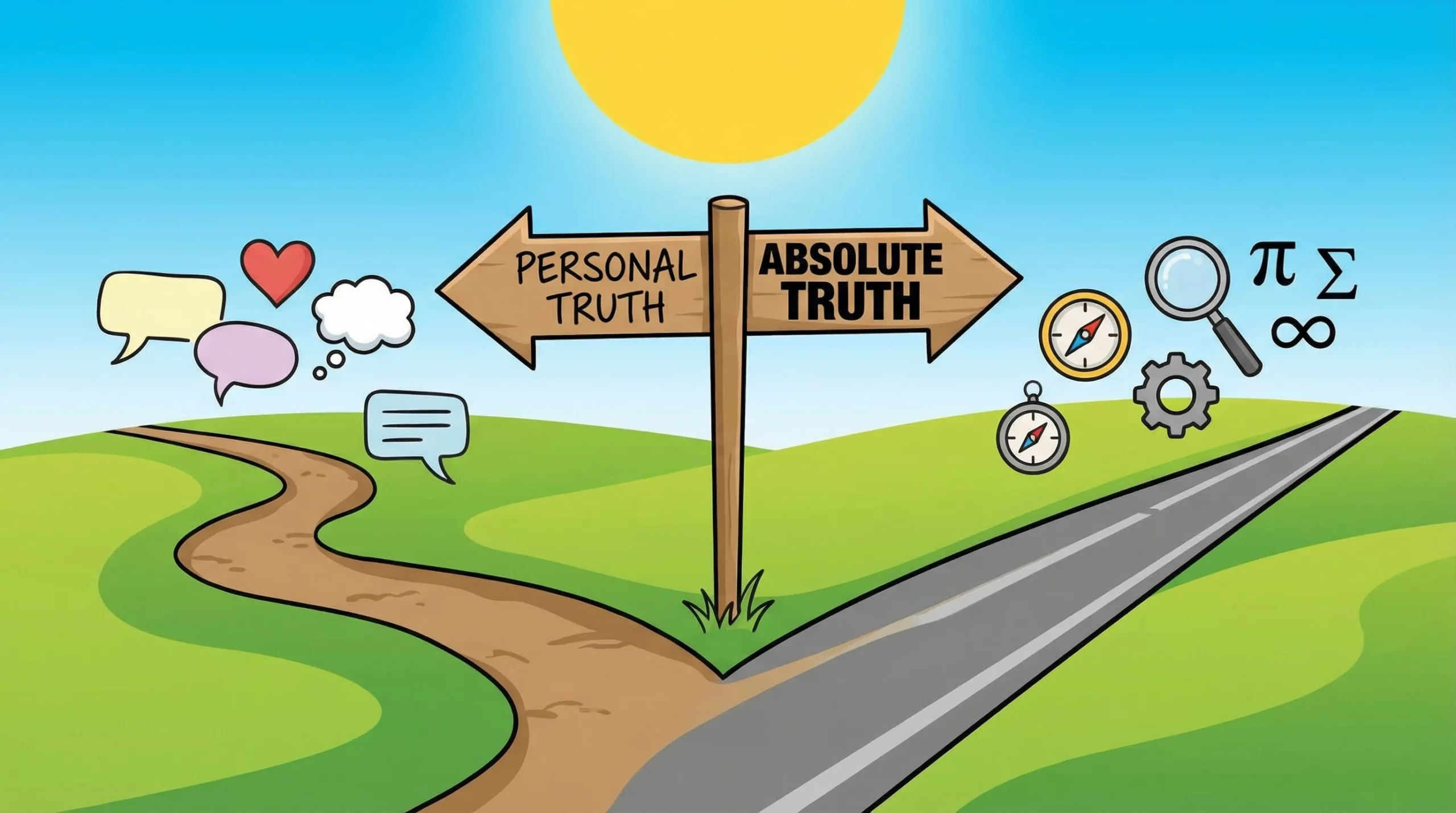
The idea of truth pops up everywhere—debates with friends, big philosophical questions, even daily choices. You might hear someone talk about “their truth” or see arguments about what’s true, depending on who you ask. At the same time, folks use phrases like “absolute truth” to describe facts that aren’t open to interpretation. Knowing the difference between personal and absolute truth can clear up confusion and help you notice how people understand the world around them.
What Does Truth Mean, Anyway?
Truth usually means something that lines up with reality or actual facts. But even this is up for debate. The word often works a little differently depending on context. For example, the fact that water boils at 100°C (at sea level) is a fact proven and agreed upon by scientists. But if I say chocolate ice cream is the best flavor, that truth holds only for me; it’s based on my personal experience.
This difference creates a bit of a spectrum. Some truths seem locked in place, while others switch up depending on who’s talking. Sorting these out is where understanding absolute and personal truth comes in handy.
Digging Deeper: What Is Absolute Truth?
Absolute truth covers facts or ideas that stay true in every situation, for every person, regardless of opinions or culture. When people talk about absolute truth, they’re pointing to things that are true no matter what. One classic example: “2 + 2 = 4.” It doesn’t matter if you’re in Paris or Tokyo; this equation works the same way.
Scientific laws often aim for this kind of stability. Gravity, for instance, happens whether anyone believes in it or not. Absolute truths are immune to trends, emotions, or personal preferences. In philosophy and religion, absolute truth sometimes means universal moral or spiritual truths, such as the idea that kindness is always good, no matter the year or country.
What Is Personal Truth?
Personal truths get built from individual experiences, opinions, and feelings. They can be super important to someone and play a big role in how they see the world. My truth about loving thunderstorms on a summer night is just that: mine. Someone else might hate the sound of thunder or worry about being outside during a storm.
- Personal truths shape attitudes, preferences, and beliefs.
- They can change over time as people learn or grow.
- They might not be “true” for anyone else, but they still feel real and matter to the person who holds them.
When people say, “I’m just living my truth,” they’re leaning on their personal understanding, not a universal rule that fits everyone.
The Three Types of Truth
People sometimes talk about three types of truth when teasing apart these ideas. Here’s a breakdown that makes things a little easier to follow:
- Objective Truth: Facts that exist independently of anyone’s thoughts or beliefs. These truths can be checked, measured, or proven; for example, “The Earth orbits the sun.”
- Subjective Truth: Ideas or experiences that depend entirely on the individual. “Blue is a calming color” might be true for me, but someone else could find it harsh or cold.
- Relative Truth: These truths depend on context or perspective. What’s true in one place, time, or culture may not hold elsewhere. Legal drinking ages vary by country, for example, so “It’s legal to buy alcohol at 18” depends on location.
Personal truth usually fits in with subjective truth, while absolute truth is the same everywhere, lining up with objective truth.
Absolute Truth vs. Personal Truth: The Main Differences
Absolute truth and personal truth may sound similar, but they’re pretty different in practice.
- Absolute truth: Facts, laws, or realities that stay the same, no matter who you are, where you live, or what you believe. These truths don’t depend on feelings or situations; they’re the same across the board.
- Personal truth: Beliefs or experiences shaped by someone’s thoughts, background, or emotions. These truths feel “real” for the individual but might change from person to person or over time.
If you’re wondering where regular “truth” fits in, it usually lands somewhere between. Truth without any qualifier tends to mean something that most people can agree on, but it doesn’t get into whether it’s set in stone for everyone, forever.
Truth and Absolute Truth: Not Quite the Same
Sometimes people use “truth” and “absolute truth” as if they’re identical, but small differences matter.
- “Truth” can mean something people accept as real or factual in a certain situation. It’s a little broader.
- “Absolute truth” is more specific. It points to something that holds up no matter what, across every person, time, or place.
For example, “Chocolate gives me a headache” is true for me (personal truth), but it isn’t absolute. “Water is made from hydrogen and oxygen” is true everywhere, so it counts as absolute truth.
Truth vs. Personal Truth
Truth and personal truth often get mixed up, but there are a few simple ways to tell them apart.
- Truth usually stands on some kind of evidence or shared agreement (“It rained yesterday”).
- Personal truth might be important for you, but it doesn’t always have physical proof behind it. (“I believe rain brings good luck.”)
Personal truths shape decisions, how people connect, and even how individuals argue in conversations. They belong to someone based on stories, history, or values. Regular truth is a little bit less private—something more folks can check out and agree on.
Everyday Examples: Spotting the Differences
Sometimes it helps to see how these truths show up in the wild. Here are a few ways they play out in real life:
- Personal truth: “Spicy food is delicious.” That’s true for me, but not for someone who doesn’t enjoy it.
- Absolute truth: “Water freezes at 0°C (32°F) under normal conditions.” This is a fact everywhere on Earth.
- Relative truth: “You drive on the right side of the road.” That’s true in the U.S., but not in the U.K.
- Objective truth: “Cats are mammals.” This doesn’t depend on opinions.
In conversations, it’s pretty common for these ideas to get tangled. If I argue that my favorite movie is “the best ever,” I’m sharing a personal truth. If I say, “This movie won the most Oscars,” that’s a fact that can be checked—an objective truth.
Sorting Out Conflicts Between Personal and Absolute Truth
People sometimes run into arguments when their personal truths bump up against what someone else claims as absolute truth. These disagreements show up everywhere, from social media to the kitchen table.
Respecting someone’s personal truth doesn’t mean you have to accept it as fact, the way you would with absolute truth. It helps to listen, ask questions, and share what you know, rather than just insisting, “I’m right.” Sometimes, discussions reveal there’s room for multiple “truths” to coexist, even if they only apply in different ways.
These conversations can become learning opportunities. By discussing personal truths and comparing them to absolute truths, people often expand their understanding of both themselves and the wider world. Sometimes, what felt like an absolute truth turns out to be more culturally or personally based than first believed. Critical thinking and open-mindedness are key tools in this process.
Why Does Understanding the Difference Matter?
Recognizing what’s personal truth and what counts as absolute truth can help you:
- Communicate better by being clear about where your experiences stop and universal facts begin.
- Handle disagreements by seeing where someone is coming from, even if you don’t agree.
- Trust information by knowing how to check facts and spot when someone’s sharing an opinion or experience instead.
- Avoid confusion in debates by letting others know when you’re expressing a personal viewpoint and when you’re stating a fact.
This skill isn’t just for philosophers; it’s super useful in everyday life, workplaces, and when watching or reading the news. People who can separate personal and absolute truth tend to be less easily fooled by misinformation, develop empathy for others, and build stronger arguments grounded in evidence.
Some educators suggest teaching these distinctions early on, so students learn to spot the difference and build healthy skepticism. Being able to sift through different types of truths helps not only in personal relationships but also in work settings, science, and public life.
Frequently Asked Questions
What’s the difference between truth and absolute truth?
Answer: Truth can mean something most people agree on or that lines up with evidence in a certain context. Absolute truth stays true no matter who you are or what you believe; it applies everywhere, always.
What is the difference between truth and personal truth?
Answer: Truth often refers to facts or shared understandings, while personal truth relies on someone’s own feelings or experiences.
What is the meaning of absolute truth?
Answer: Absolute truth means a fact, principle, or reality that doesn’t change based on feelings, culture, or perspective. It stays the same in all circumstances.
What are the three types of truth?
Answer: The three types often discussed are objective truth (independent facts), subjective truth (personal experiences), and relative truth (facts based on context or culture).
Figuring out the differences between personal truth and absolute truth brings a lot of clarity, whether you’re discussing movies, facts, or bigger ideas. Knowing how to spot each one helps you navigate conversations, verify information, and appreciate the variety of ways people see the world.